Vidhubala Biography
source link(google.com)
Name:Madhubala
Date of Birth
14 February 1933 – 23 February 1969
Mini Biography
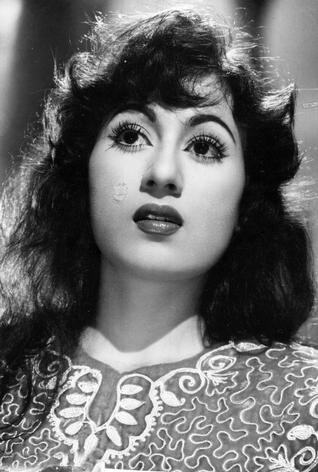
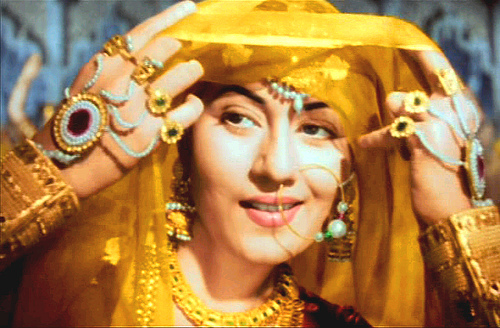
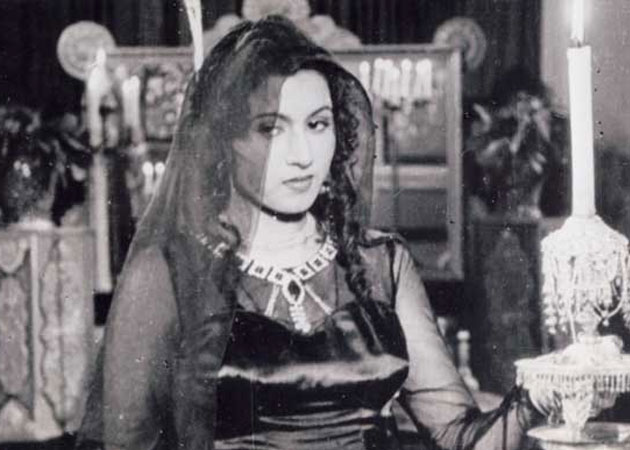
Mumtaz Jahan Dehlavi, was an Indian Bollywood actress who appeared in classic films such as Mahal (1949), Mr. & Mrs. '55 (1955), Chalti Ka Naam Gaadi (1958) and Mughal-e-Azam (1960).Famously known as the Venus queen of Indian cinema she was active between 1949 and 1960, after which illness shortened her career. With her contemporaries Nargis and Meena Kumari she is regarded as one of the influential Hindi movie actresses.
[1]
Early life
Madhubala's first movie,
Basant (1942), was a box-office success.
[5] She acted as the daughter to a mother played by actress Mumtaz Shanti. As a child actress she went on to play in several movies. Actress Devika Rani was impressed by her performance and potential, and advised her to assume the screen name 'Madhubala',
[6] meaning 'a woman of honey'.
Her first lead role, at 14-years-old, was with producer Kidar Sharma when he cast her opposite Raj Kapoor in
Neel Kamal (1947).
[5]This was the last film in which she was credited as Mumtaz before assuming her screen name 'Madhubala'.
She achieved stardom and popularity in 1949 when she was cast as the lead in Bombay Talkies studio's
Mahal – a role intended for well-known star Suraiya. Madhubala, with established actresses, screen-tested for the role before she was selected by the film's director Kamal Amrohi. The film was the third largest hit at the 1949 Indian box office.
Following the success of
Mahal, Madhubala appeared in the box office hits
Dulari (1949),
Beqasoor (1950),
Tarana (1951) and
Badal
Hollywood interest
In the early 1950s, as Madhubala became one of the most sought-after
actresses in India, she attracted interest from Hollywood. She appeared
in the American magazine
Theatre Arts where, in its August 1952
issue, she was featured in an article with a full page photograph under
the title: "The Biggest Star in the World - and she's not in Beverly
Hills". The article described Madhubala's immense popularity in India,
and explored her wide appeal and large fan base. It also speculated on
her potential international success.
[4]
Stardom
Madhubala's co-stars Ashok Kumar, Raj Kapoor, Rehman, Pradeep Kumar, Shammi Kapoor, Dilip Kumar, Sunil Dutt and Dev Anand were the most popular of the period. She also appeared with Kamini Kaushal, Suraiya, Geeta Bali, Nalini Jaywant, Shyama and Nimmi, notable leading ladies. The directors she worked with, Mehboob Khan (
Amar), Guru Dutt (
Mr. & Mrs. '55), Kamal Amrohi (
Mahal) and K. Asif (
Mughal-e-Azam), were amongst the most prolific and respected. Madhubala also became a producer with the film
Naata (1955), in which she also acted.
[7]
During the 1950s, Madhubala took starring roles in almost every genre of film being made at the time. Her 1950 film
Hanste Aansoo was the first ever Hindi film to get an "A" – adults only – rating from the Central Board of Film Certification.
[8] She was the archetypal fair lady in the swashbuckler
Badal (1951), and following this, an uninhibited village beauty in
Tarana (1951). She played the traditional ideal of Indian womanhood in
Sangdil (1952), and produced a comic performance as the spoilt heiress, Anita, in Guru Dutt's satire
Mr. & Mrs. '55 (1955). In 1956 she acted
in costume dramas such as
Shirin-Farhad and
Raj-Hath, and played a double role in the social drama
Kal Hamara Hai (1959).
In the mid-1950s, her films include the major movie Mehboob Khan's
Amar (1954). In 1958, she acted in six films that were all super hits. In
Howrah Bridge, opposite Ashok Kumar, she played the role of an Anglo-Indian Cabaret singer involved in Calcutta's Chinatown underworld. In
Aaiye Meherebaan she lip-synced a torch song dubbed by Asha Bhosle which has remained popular to this day. She played opposite Bharat Bhushan in
Phagun; Dev Anand in
Kala Pani; Kishore Kumar in
Chalti Ka Naam Gaadi; and Bharat Bushanagain in
Barsaat Ki Raat (1960) AND in 1960 she appeared in the FILM Mughal-e-Azam.
Madhubala made over seventy films from 1947 to 1964, only fifteen of which were box office successes.
Mughal-e-Azam and later work
It was the film
Mughal-e-Azam that marked what many consider to be her greatest and definitive characterization, as the doomed courtesan Anarkali. Director K. Asif,
unaware of the extent of Madhubala's illness, required long shooting
schedules that made physical demands on her, whether it was posing as a
veiled statue in suffocating make-up for hours under the studio lights
or being shackled with heavy chains. From 1951 to 1959 Madhubala
invested her best efforts into
Mughal-e-Azam.
Mughal-e-Azam
released on 5 August 1960, and became the biggest grossing film at that
time, a record that went unbroken for 15 years until the release of the
film Sholay
in 1975. It still ranks second in the list of all time box-office hits
of Indian cinema. Despite performing alongside the most respected acting
talent of the industry, Prithviraj Kapoor, Durga Khote, and Dilip Kumar. She received some recognition as a serious actress when she was nominated for a Filmfare Award. In Khatija Akbar's
biography on Madhubala, Dilip Kumar paid tribute to her talent: "Had
she lived, and had she selected her films with more care, she would have
been far superior to her contemporaries. Apart from being an excellent
artiste and very versatile, she had a cheerful nature."
In 1960 Madhubala was at the peak of her career and popularity with the release of back-to-back blockbusters
Mughal-e-Azam and
Barsaat Ki Raat.
She did have intermittent releases in the early 1960s. Some of these, like
Jhumroo (1961),
Half Ticket (1962) and
Sharabi
(1964), performed above average at the box-office. However, most of her
other films released during this time were marred by her absence and
subsequent lack of completion through illness. These films suffer from
compromised editing, and in some cases the use of "doubles" in an
attempt to patch-in scenes that Madhubala was unable to shoot. Her last
released film
Jwala, although filmed in the late 1950s, was not issued until 1971.
Personal life and controversies
Dilip Kumar and Madhubala first met on the set of
Jwar Bhata (1944), and worked together again on the film
Har Singaar (1949), which was shelved. Their relationship began two years later during the filming of
Tarana
(1951). They became a romantic pair appearing in a total of four films
together. Actor Shammi Kapoor, in a recorded interview, described how
Kumar used to meet Madhubala by arriving late on the set of a film that
she and Kapoor were filming together.
In an interview her sister Madhur Bhushan described the events as:
[3]
The reason Madhubala broke up with Dilip Kumar was B R Chopra's film
Naya Daur,
not my father. Madhubala had shot a part of the film when the makers
decided to go for an outdoor shoot to Gwalior. The place was known for
dacoits, so my father asked them to change the location. They disagreed
because they wanted a hilly terrain. So my father asked her to quit the
film. He was ready to pay the deficit. Chopra asked Dilip Kumar for
help. Dilipsaab and Madhubala were engaged then. Dilipsaab tried to
mediate but Madhubala refused to disobey her father. Chopra's production
filed a case against her, which went on for a year. But this did not
spoil their relationship. Dilipsaab told her to forget movies and get
married to him. She said she would marry him, provided he apologised to
her father. He refused, so Madhubala left him. That one 'sorry' could
have changed her life. She loved Dilipsaab till the day she died.
Madhubala's love-life continues to be the subject of media speculation. Mohan Deep, in an unofficial biography of Madhubala, states that B. K. Karanjia,
former Filmfare editor and a close friend of both Madhubala and her
father Ataullah Khan said: "Yes, there were so many in love with her,
she used to play one against the other. But it was out of innocence
rather than shrewd calculation. Madhubala was a child at heart."
However, commenting on the biography, Shammi Kapoor
said: "Mohan Deep is a swine. You can't cash in on the dead—it is in
bad taste. It is a pity that while in America you could be sued for
misrepresentation, in India sleaze only gives a shot to sales. That's
the reason I believe one should let lying dogs lie. Madhubala, a
wonderful person and a dedicated artiste, doesn't deserve this." This
view by Kapoor was supported by Paidi Jairaj, and Shakti Samanta
rejected all Deep's comments. Film journalist M.S.M. Desai stated:
"Also, Mohan Deep was not around at the time of Madhubala, so how is he
capable of writing about her without resorting to hearsay?"
[9]
Final years and death
When acting was no longer an option Madhubala turned her attention to
film direction. In 1969 she was set to make her directorial debut with
the film
Farz aur Ishq.
However the film was never made as during pre-production she died on 23
February 1969 shortly after her 36th birthday. She was buried with her
diary at the Santa Cruz Muslim cemetery by her family and husband Kishore Kumar.
[10] Her tomb was marble with added aayats from the Quran and verse dedications. Controversially, her tomb was demolished in 2010 to make space for new graves.
[11] More recently in Rediff.com's
International Women's Day 2007 special, Madhubala was ranked second in
its top ten list of "Bollywood's best actresses. Ever".
[12]
Every year, on her birthday (which coincides with Valentine's Day),
numerous articles are printed and TV programmes aired to commemorate the
occasion, to the present day.
Her posters are still in demand and sold alongside contemporary
actresses and modern magazines continue to publish stories on her
personal life and career, often promoting her name heavily on the covers
to attract sales.
In 2004 a digital-colorized version of
Mughal-e-Azam was released, 35 years after her death. In 2012 her 1962 release
Half Ticket was also remastered, digitaly coloured and re-released.
In 2008 a commemorative postage stamp featuring Madhubala was issued.
[13] The stamp was produced by India Post in a limited edition presentation pack. It was launched by veteran actors Nimmi and Manoj Kumar
in a ceremony attended by colleagues, friends and surviving members of
Madhubala's family. The only other Indian film actress that was honoured
in this manner was Nargis Dutt, at that point of time.
[14]